
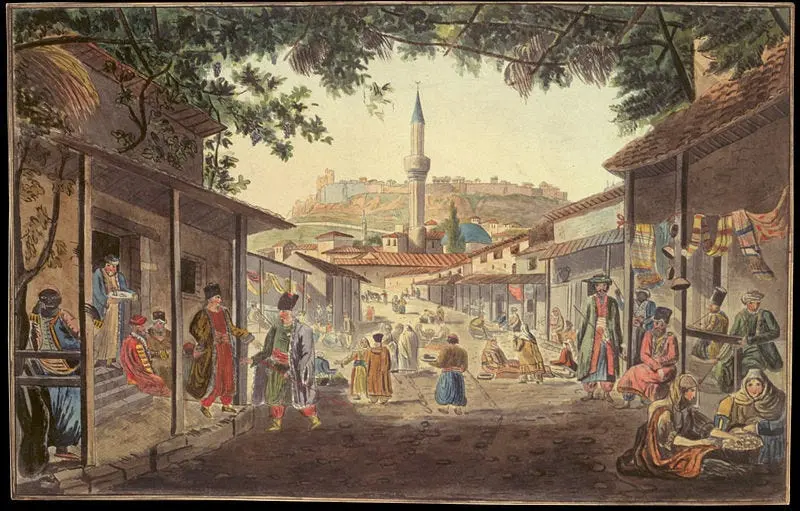
What is economics?
Economics is the science that studies how humans use scarce resources to satisfy our needs and desires.
We realize that economics is not about numbers and calculations (although they are used extensively), but is actually a fundamentally social science. Economics studies us as humans and as part of a society, and those scarce resources are the ones that surround us and that, thanks to our intelligence and capacity, we use to advance civilization. We are talking about activities that we have been undertaking as a species since the beginning of humanity.
What scarce means?
When we talk about a scarce good or service, we refer to a good or service in which the supply does not satisfy the entirety of the demand. In other words, society as a whole wants more of it than what is available.
For example, oxygen is something that is completely necessary for us (the demand is undeniable), but the amount is so abundant that all the oxygen supply we have available is more than enough for all the demand that humanity generates (in general terms). We almost perceive it to be unlimited, although we know that in physical reality it is not. This example shows us that the idea of something being scarce, in economic terms, does not have to do with whether it has a limited supply or not, but with the relationship between that supply and demand.
Everything that finds this imbalance becomes a scarce good and is a subject of study for economics. That is, if we think about it, we are referring to almost everything that surrounds us and has, in some way, a price.
What are supply and demand?
Demand refers to the amount of a certain good (or service) that a certain group of people desires to obtain. We talk about a group of people because the study of economics can be at a global level, of a certain nation, city, or of a certain group of people. Demand is that quantity that, according to those people, will be sufficient to cover their needs and wants. On the other hand, supply is the amount of that good or service that the group of people has available and accessible.
It is important to make the distinction of “accessible” or “available”, as that is what affects the competition between supply and demand, and eventually determines if that good is scarce. An example can be gold and the news we sometimes hear about mining in asteroids. We know that there can be exorbitant amounts of gold in outer space, however, they are not available to fulfill our needs or wants, and therefore gold remains a scarce good for humanity today.
How do we then resolve that disparity between supply and demand in those goods and services that we identify as scarce? That is the study of economics and one of the tools that can solve that problem is the market.
What is the market?
Let’s start by posing a simple scenario: when demand exceeds supply, we have fewer units of a good to distribute among a certain group of people. So, which people will get the units and which people will be left without receiving the ones they demand?
We will start with a premise that may seem obvious, but it is not, and not everyone sees it as such: the available supply of that good or service is owned by someone. Some examples: cars are owned by each factory to dispose of, toys are owned by each toy store to dispose of, the service of carpentry or software consulting belongs to each individual to dispose of. In each of these cases, the good or service is owned by one or more individuals (separately or collectively) either because they produced that good, acquired it, or because they have their body and mind to perform that task.
Taking that as a starting point, and assuming that we have, for example, 10 units of a good but 15 people who want one, how does the owner decide who to give those 10 units to? One of the first answers that will come to mind is: “whoever offers more in exchange.” And it is correct, in most cases that will be what happens. If we multiply this by many more providers of that good, and many more people who demand it, we will not only have the provider looking for who offers more but we will also have people (customers) looking for those who request less. These forces are opposed and are in constant exchange. If we then extrapolate this example to multiple goods and services, we have an intricate system that involves millions of people in the world and that distributes these goods and services, moves them, and transforms them from person to person.
What we have just described is the market. No more, no less. Each of us, with the smallest daily action, is part of that market.
What is price?
We talk about a scarce good in economics, which is also a good that has a price. This is due to the existence of a market, which we have also discussed. The price is the indicator of what the market (each of us as an actor) considers that good or service is worth, expressed in some form of money. That is why we usually see the price as a number followed by a unit or currency. Also, for that reason, it is said that the price is the result of the bid between supply and demand.
The price can vary over time because, logically, the supply and demand for a good or service can also change. A good can have been surpassed by another new good that appeared in the market, so the original good begins to be less demanded. If we go back to the original example of 10 units, it may happen that at some point only 11 people want one unit instead of 15. Then the competition between those people will not be so strong and they probably will not be willing to offer much for it (the price to pay) since it is not so difficult to get one. Not to mention if in the same scenario of 10 units suddenly only 9 people want one, by then we have crossed the threshold where the good has ceased to be scarce.
The idea that the good or service is difficult to obtain is not a minor factor, and that explains why in some circumstances or places in the world the same good may appear in the market at different prices. The balance that each individual makes between their desire to have the product and what they are willing to give in exchange is the price that each one is willing to pay. That desire or need, counteracted by the difficulty of obtaining said good, multiplied and combining the experience of each market participant, is what ultimately impacts the price. That difficulty we talked about is directly related to what we call supply, in that particular circumstance.
Another way to see the price is as information. The price is the best metric that each market participant has to know how the rest of the market perceives that good or service. It is the indicator par excellence to know what level of valuation is given to that item, and how supply and demand are balanced at that moment.
For all of this we have discussed to work better according to the mechanics we described, it is a prerequisite that information (not just the price) flows as best as possible.
Are value and price the same thing?
Value and price are not the same. Price is the result of the market mechanics we discussed earlier, but value is something completely individual and subjective.
Value is the weighting each of us assigns to something. It is the scale on which we place that thing in relation to everything else in our lives, and it also depends on the circumstances in which we find ourselves at a given moment. For this reason, the idea of “intrinsic value” makes no sense and ends up being a contradiction in itself (an oxymoron). If value is something that depends on each individual’s perception, it clearly cannot be intrinsic to an object.
For example, a bucket of sand would have no value to a person lost in the desert, while it could be worth a lot to someone who needs it for building construction. Another example would be oxygen or water, which one could argue are undoubtedly necessary. But what if we were a life form that did not depend on water or oxygen? The value we assign to them would no longer be the same. These obvious, basic, or extreme examples should help us deduce and realize that value is not a property that the object itself brings, but rather it is the human who interacts with the object who assigns it. They do so based on the properties that are intrinsic to the object, but value is not one of them. Value is assigned.
Price, then, is the way in which the valuations of each of the market actors are coordinated to achieve a joint representation, and inform about it.
What is money?
Money is a tool that humanity has been using for a very long time to assist in trade.
This tool that we call money allows us to standardize the information we call price, and allows us to achieve coordination on a large scale as a civilization in a similar way to what language achieves. In a way, money is a kind of language that we use to communicate and transport value in time and space. It is also a fundamental piece for this system of resource distribution that we call the market to function.
Why does economics matter?
Economics matters because it helps us understand ourselves as a species, just like the study of language, history, or anthropology.
Being able to understand basic economic concepts doesn’t require advanced prior knowledge, and it appeals to our ability to reason and understand social interactions. Even our ability to understand ourselves individually. As each of us can see the world through an economic lens, we will interpret what happens around us and make better decisions according to our preferences. It is clear that the world around us is very complex and the economic gears, immersed as a fundamental part, do not escape that complexity. However, by understanding the basics, we get very good tools to understand everything else since, ultimately, everything comes down to needs, desires, supply, demand, value, prices… market.
In economics, there are various schools of thought that, although they may start from the same basic concepts, arrive at different conclusions or even form opinions and ideologies about what is right and wrong.
Why should we care about economics? Because the market is a mechanism that surrounds us and because we are part of it. Because it exists, whether we understand it or not. So why not assume that all of this is part of our nature and try to understand economics?
Sources
La Economía no tiene que ser complicada - Estudio Bitcoin
Visit our Website
With so many hardware wallets on the market, it can be challenging to choose the right one for your needs. That’s where our Hardware Wallet Comparison TheBitcoinHole.com website comes in. You will find the most comprehensive and honest resource for comparing the features of the top hardware wallets.
Support Us
There are different ways to support our work:
 Support Us on Ko-fi