

Pros & Cons
The honest breakdown of what each home server OS does better.
Umbrel
⭐ Winner- Free, with no paid tier and no licence to renew
- Tailscale built into the OS, no port forwarding
- Curated app store, every app packaged and tested
- Bitcoin Core, Lightning, mempool and BTCPay as one-click apps
- Source public and auditable on GitHub
- Self-host AI locally: Ollama, Open WebUI
- Runs on a Raspberry Pi, not just x86
- First-party hardware if you would rather not build one
- umbrelOS 2.0: FailSafe (RAID), virtual machines, GPU acceleration for apps
- FailSafe (RAID) wastes space on mixed drive sizes, and not on Raspberry Pi
- Virtual machines, but no documented GPU passthrough to them
- Smaller app catalog than Community Applications
- PolyForm Noncommercial license: not open source
Unraid
- Storage array mixing drives of any size, with parity
- Expand one disk at a time, no matching drives needed
- Full virtual machines on KVM, with GPU passthrough
- Community Applications: one of the largest catalogs
- Perpetual licence, one-time payment, no subscription
- 30-day free trial, no credit card
- Boots from a USB stick, leaving all drives for data
- Paid: $49 / $109 / $249 depending on tier
- Starter and Unleashed include only 1 year of updates
- Proprietary: the OS source is not published
- No first-party Tailscale integration
- No packaged Bitcoin or Lightning apps
- x86 only: no Raspberry Pi
Feature-by-Feature Comparison
Umbrel vs Unraid as home server platforms. Pricing and features from each vendor's own pages.
| Feature | Umbrel Home server OS | Unraid by Lime Technology |
|---|---|---|
| Price | ||
| Cost of the OS | Free | From $49 |
| Entry tier | — | Starter $49 · 6 storage devices |
| Mid tier | — | Unleashed $109 · unlimited devices |
| Top tier | — | Lifetime $249 · updates forever |
| Updates included | Always | 1 year, or forever on Lifetime |
| Free trial | Not needed, it is free | 30 days, no card |
| Storage | ||
| Storage array | Yes, Storage Manager (umbrelOS 2.0) | Yes |
| Mix drive sizes | Only without FailSafe | Yes |
| Parity protection | Yes, FailSafe: RAIDZ1 on SSDs, mirrors on HDDs | Yes |
| Expand one disk at a time | SSDs yes; hard drives in mirrored pairs | Yes |
| Apps & virtualisation | ||
| Docker apps | Yes | Yes |
| Curated app store | Yes + Community Stores | Community Applications |
| Virtual machines | Yes, Machines (umbrelOS 2.0) | Yes, on KVM |
| GPU passthrough | To apps (Ollama, Jellyfin); not documented for VMs | Yes |
| Media & files | Plex, Jellyfin, Nextcloud, Immich | Plex, and the CA catalog |
| Smart home | Home Assistant, Homebridge | Home Assistant |
| Ad blocking | Pi-hole, AdGuard Home | Pi-hole, AdGuard |
| Local AI | Ollama, Open WebUI | Via Docker, unpackaged |
| Bitcoin & Lightning apps | One-click | Via Community Applications |
| Access, hardware & licensing | ||
| Tailscale built in | Yes | No, set it up yourself |
| Source published | Yes | No, web UI only |
| Fully open source | No | No |
| Runs on Raspberry Pi | Yes | No, x86 only |
| First-party hardware | Umbrel Home / Pro | Bring your own |
| Hardware from | $549 (Home) / $699 (Pro) | Bring your own |
What to run them on
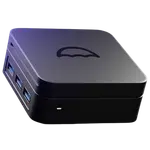
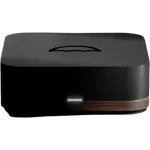
Umbrel is free on hardware you already own; Unraid needs an x86 machine and a licence. Build your own, or skip the build with Umbrel's ready-made options.
Frequently Asked Questions
Everything people ask when comparing Umbrel vs Unraid in 2026.
Which is better overall: Umbrel or Unraid?
They are built for different jobs, and the honest answer depends on yours. Umbrel is free, simpler, and organised around a curated app store with Tailscale in the OS and one-click Bitcoin and Lightning apps. Unraid costs from $49 and is still more capable as infrastructure: a storage array that mixes drives of any size with parity protection, virtual machines with GPU passthrough, and the huge Community Applications catalog. umbrelOS 2.0 narrowed the gap with FailSafe (RAID) storage and virtual machines, but not that far. If you want a box that runs self-hosted apps with the least friction, Umbrel. If you want a serious NAS and a hypervisor in one machine, Unraid earns its price.
How much does Unraid cost?
Unraid sells perpetual licences in three tiers, each a one-time purchase with no subscription: Starter at $49 for up to 6 storage devices, Unleashed at $109 for unlimited devices, and Lifetime at $249 for unlimited devices. Starter and Unleashed include one year of OS updates; after that the software keeps working but new versions require an extension. Lifetime includes updates forever. There is a 30-day free trial with no credit card. Umbrel, by contrast, is free with no paid tier.
Is Unraid open source?
No. Unraid is proprietary commercial software; only parts such as the web UI are published on GitHub. Umbrel is not open source either, but for a different reason: its source is public and auditable on GitHub under the PolyForm Noncommercial License 1.0.0, which restricts commercial use. So on transparency Umbrel is ahead, and on neither side will you find an OSI-approved licence.
Can Umbrel do RAID or a storage array like Unraid?
Partly, since umbrelOS 2.0. Its Storage Manager pools two or more internal drives and offers FailSafe: ZFS RAIDZ1 on SSDs, mirrored pairs on hard drives, so one drive can fail without losing data. It is not Unraid's array, though: with FailSafe, extra space on larger SSDs goes unused, hard drives are added in mirrored pairs, and it is not available on Raspberry Pi. If you want to mix drives of any size under parity and grow one disk at a time, Unraid is still the one built for it.
Can I run virtual machines on Umbrel?
Yes, since umbrelOS 2.0. Its Machines feature runs Windows, Ubuntu, Debian, Android and more as virtual machines, installed in one click and used from a desktop in your browser. It is built for convenience rather than as a full hypervisor: only the owner account can use it, and Umbrel's documentation does not list GPU passthrough to a machine (umbrelOS 2.0 passes GPUs through to apps like Ollama and Jellyfin instead). Unraid runs full virtual machines on KVM and can pass a graphics card through to one, which is why people use it for a gaming VM or video editing. If you need that, Unraid is still the one that does it.
Can I run a Bitcoin node on Unraid?
Yes, through Community Applications templates for Bitcoin Core and related services, but you connect the pieces yourself: storage, pruning, RPC credentials and the wallet or Electrum server that talks to the node. Umbrel packages Bitcoin Core, a Lightning node, mempool, Electrum servers and BTCPay Server as one-click apps already wired together. If running a node is the reason for the machine, Umbrel gets you there in an afternoon and free. See our Umbrel vs Start9 comparison for the two node-focused platforms head to head.
Related comparisons
Other head-to-heads that cover one of these products.
Ready to build your home server?
Umbrel is free on hardware you already own. If you would rather skip the build, Umbrel Home is our pick for 2026. The affiliate links below support The Bitcoin Hole at no extra cost to you.
Authorship & Editorial Standards

Affiliate disclosure & independence
We are not owned by, funded by, or contracted to Umbrel, Lime Technology, or any other manufacturer. Brands cannot pay to be added, removed, reordered, or rated more favorably.
Some BUY links on this page are affiliate links: we may earn a commission at no additional cost to you if you purchase through them. Affiliate relationships do not influence which products we list, the data we show, or how we rank them. Our pick stays the same whether or not a link pays.
Sources & methodology
Last updated: September 2026
Unraid's licence tiers, prices and trial length are taken from its own purchase page; its features from the official product pages. Umbrel's release data comes from the GitHub API, its licence from the LICENSE file in the repository, and its storage and virtual machine features from the umbrelOS 2.0 release notes and Umbrel's support pages. Prices were checked in August 2026 and are the most perishable fact here: check the vendor pages linked below before acting on them. Pricing for Umbrel hardware comes from our product database and reflects the base configuration of each model.
How we pick the winner
For a home server operating system we weigh what the machine is for first, then total cost, app packaging and curation, storage capabilities, remote access and source availability. Where two systems are built for different jobs, we say so instead of forcing a single winner. When a fact cannot be confirmed from a primary source, the field is left empty rather than guessed. Umbrel wins here on price, packaging and remote access; Unraid wins on storage, virtualisation and catalog size.